sixteenmillimeter.com

OPEN STANDARDS FOR THE MOVING IMAGE

july 11, 2012 10:23pm

Workprint = freekode

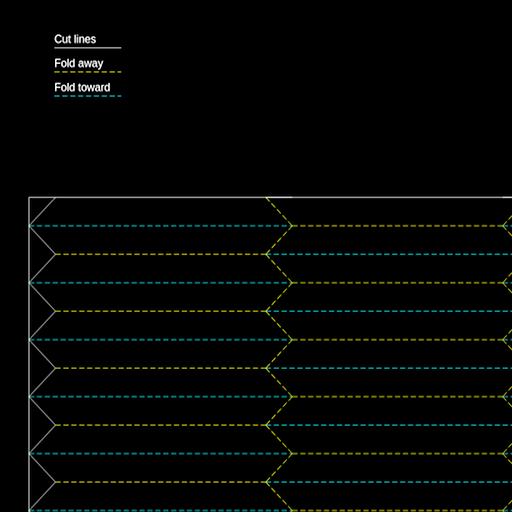
Hey. News on the development of my cutlist software. I finished the first version of a javascript port from Processing, meaning that you can now create cutlists through the web. Upload your file to me (if you're an HTML5 File API expert, we should talk), you enter the relavent KeyCode/MR-Code information and you're done.

Check it out here here.

Or check out the code (or make some commits) here

Documentation on usage to come before real documentation on the software. Promise.

Posted By: matt

0 comments | Comment

june 23, 2012 11:02pm

Optical Printer test


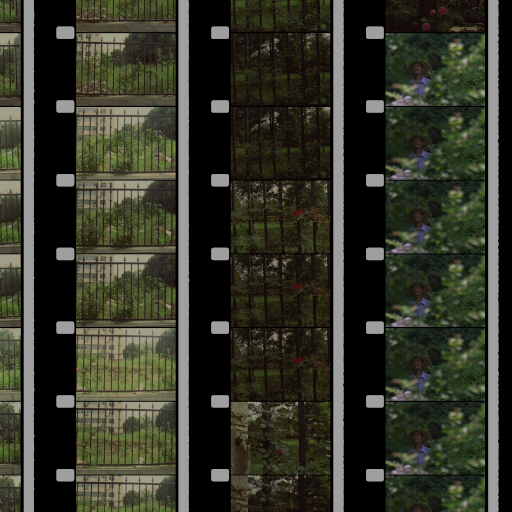
This is the first lab-processed roll from the optical printer using a new mechanical arrangement, paired with the same software that's available on this site. I have been working to release all of the software I've been writing, but I can't pinpoint the right forum.

Anyway, this is a roll I shot while I was working out focus, exposure, timing and actually running the machine with film in it. I am using an INTVAL board controlling a solenoid to trigger the camera. The projector is a Bell & Howell with a failed motor that I replaced with a much less impressive DC motor I ripped from a printer. The light is a 50w 12VDC halogen MR-16 bulb that I bought at the dollar store.

You can notice the frame shifting around mid-shot, as I work out optimal framing and replaced extension tubes on the lens to get exact 1:1 magnification. There is also a noticeable blurriness (caused by camera shake) in every frame in the second shot, the step print of the girl spinning. This is caused by the considerable force suddenly applied to the solenoid, which I am in the process of slowing down and applying a better easing function that triggers the camera over a longer span of time. This will slow down the printing process but will improve registration greatly.

I didn't take notes when I shot this roll, but I was shooting Vision 3 200T and used a f/5.6-4 on most shots as determined by a spot-meter. Let me know what you think if you have any comments or questions, matt 'at' [this domain].

Posted By: matt

0 comments | Comment

march 11, 2012 08:01am

INTVAL - Parts

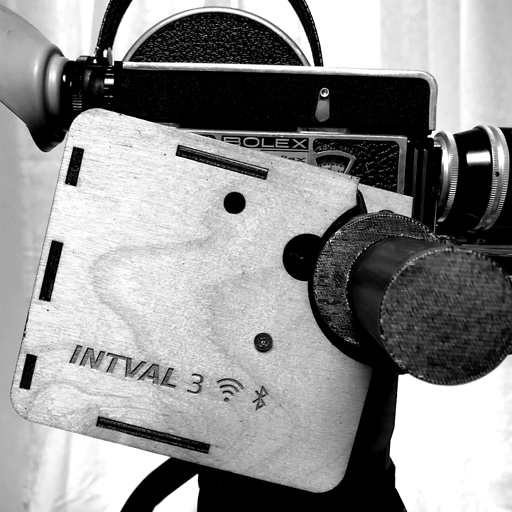
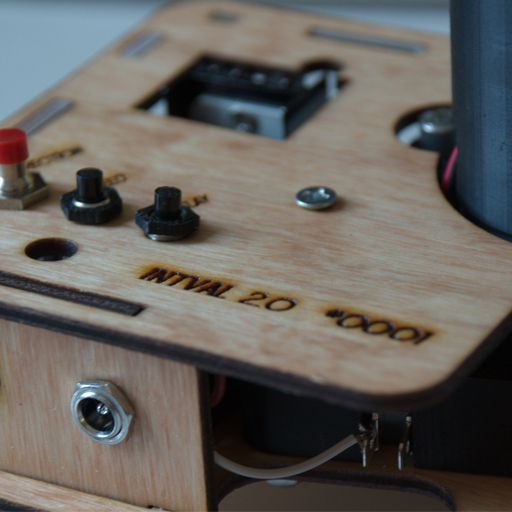
This intervalometer arose as a proof of concept for a larger project - an optical printer. I needed an inexpensive way to control a film camera (in this case a Bolex). The projector required for the printer can be controlled with a single arduino and a motor shield but in order to capture frames in sync with the projector, I need a way to physically trigger a camera using the same program.

There are several models of intervalometer on the market that perform essentially the same task through different interfaces with the camera. To trigger the Bolex, you have 2 options: manually triggering the shutter release pin, such as in this approach: http://www.intervalometers.com/timeflow/index.php or using the Tobin style unit which utilizes the 1:1 shaft (below labeled 'j') on the side of later-model Bolexes, seen here.

A side-mounted unit that controls the shutter directly is ideal, but it requires a powerful motor and a way to mount it. Reducing it to the lowest amount of work, triggering a single frame really only requires a single pushing motion using the trigger labeled 'b':


With a shutter release cable, the motion is again reduced to pressing in the release. For that, a solenoid is ideal. Solenoids are actuators that close (or open) when a current is applied. They're commonly used to open and close valves in industrial machines. They're also cheap and easy to wire, making them an excellent simple solution for triggering an analog camera.

This project requires the following parts, which can be gathered for under $60:

1: Arduino (168+) (I used this one)
2: 24vdc Solenoid (this one)
3: TIP120 Transistor (this one)
4: 1N4004 Rectifier (this one)
5: Shutter release cable + Bolex attachment
6: Breadboard for prototyping or copper clad PCB board + etchant as pictured:
0312Capture_00039-small.jpg
0312Capture_00045-small.jpg


The rest: Power supply for the Arduino (I use 4 AA batteries) and power supply for the solenoid (I use 4 9v batteries). Jumpers or wire for connections.

Here's the arduino (v.022) code:

INTVAL.zip

Instructable to come. I'm making another one that's more than. If you're interested one, email matt@ this site.

Posted By: matt

0 comments | Comment

march 08, 2012 09:57am

Intervalometer Preview

Posted By: matt

0 comments | Comment

january 05, 2012 01:43pm

INTVAL - A cheap intervalometer for the Bolex

With only an Arduino microcontroller board, a single transistor and a solenoid you can turn any Bolex (or similarly spring-release triggered camera) into an animation camera capable of time-lapse and long exposures. Save those thumbs.

0112SHIELD_600dpi-sampled.png


(Solder mask for the board above, but the tutorial will be posted shortly)

Posted By: matt

0 comments | Comment

june 04, 2011 10:33am

Found uility

Forensic analysis of an old harddrive has yielded an old application for calculating DoF on different film formats. Uses the ASC Manual's math. (Note: The '8mm' setting should actually be labeled 'Super 8').

Enjoy:


0611dofscreen.png

Posted By: matt

0 comments | Comment

march 03, 2011 07:24pm

Editing 16mm Cheap

Check out Freekode: a free, open-source sketch to edit 16mm films in Final Cut Pro.

Taking advantage of FCP's XML Interchange features and the edge numbering on film, this program allows you to generate a cut list using any type of transfer--even just taping a projector off of a screen.

0311tranny.png


Download the source, modify it, make it better, give feedback.

Posted By: matt

0 comments | Comment